
Leadership Development
Subscribe to Newsletter
Service, Not Standing: Rethinking the Ethics of Academic Leadership in the Health Professions
Every academic leader in the health professions eventually learns to say the word fiduciary. We reach for it to explain a hiring freeze, a denied accommodation, a colleague let go. It carries real weight: those entrusted with tuition dollars, clinical partnerships,...

Rigor and Compassion Aren’t Opposites: Holding High Standards Without Giving Up on the Learner
Rigor and compassion aren't opposing forces in healthcare education — they're partners. The strongest academic leaders I know hold both at once: unwavering standards paired with a genuine commitment to understanding and supporting each student's path forward. That...
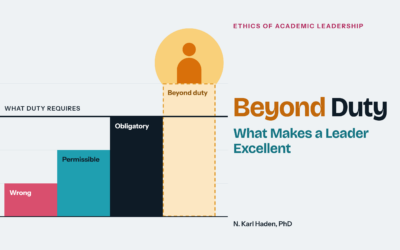
Beyond Duty: What Makes a Leader Excellent
What do we mean when we say a person is an excellent leader? Depending on the context, excellent could mean a variety of things. Most people would say excellent leaders demonstrate knowledge and abilities that enable them to move others toward a shared goal or vision....
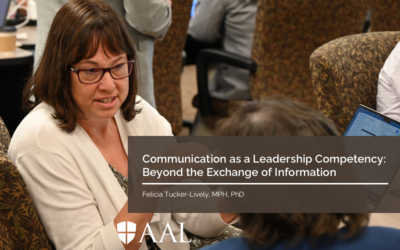
Communication as a Leadership Competency: Beyond the Exchange of Information
Communication is often treated as a skill to deliver information clearly, but Dr. Felicia Tucker-Lively argues it’s better understood as a relational leadership competency in its own right. Drawing on the Communication Competency Assessment in Health Professions and relational leadership theory, she outlines practices like listening to understand, adapting to the audience, and cultivating respectful dialogue. She offers a timely reminder for leaders in health professions education: trust and collaboration grow not from information alone, but from the relationships and conditions leaders create around it.
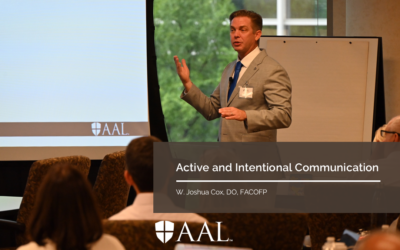
Active and Intentional Communication
Good communication has always relied on two disciplines working together: listening to genuinely understand, and sharing information with the same care. Dr. W. Joshua Cox examines how leaders in health professions education can strengthen both halves of that process, from active listening to intentional, deliberate follow-through. He offers a timely reminder for chairs, program directors, and deans: by listening to understand before responding and communicating with strategy and intention, today’s leaders can build the trust that turns disagreement into collaboration and decisions into shared commitment.

The Announcement Is Not the Communication
A single well-timed announcement rarely wins people over — even when the decision behind it is right. Dr. Sukirth Ganesan traces two moments from his own directorship where the same good idea landed differently depending on whether it arrived as a surprise or grew out of individual conversations and genuine input. He offers a timely reminder for new leaders in health professions education: real buy-in comes from the quieter work of listening and adapting before the decision is announced, not from the strength of the announcement itself.

Culture Starts with Leadership: From Self-Awareness to Organizational Transformation
Culture significantly influences how people perceive their organizations and approach leadership challenges. Exceptional leaders recognize they cannot effectively fulfill their responsibilities without considering the culture of their organization. Attempts to fix or...

Culture As A Leadership Responsibility
The culture within any professional setting, be it a school or a clinic, is initially a leadership responsibility, but when implemented correctly, becomes a shared set of values that is greater than, and expected to outlive, the tenure of any single leader. That...