
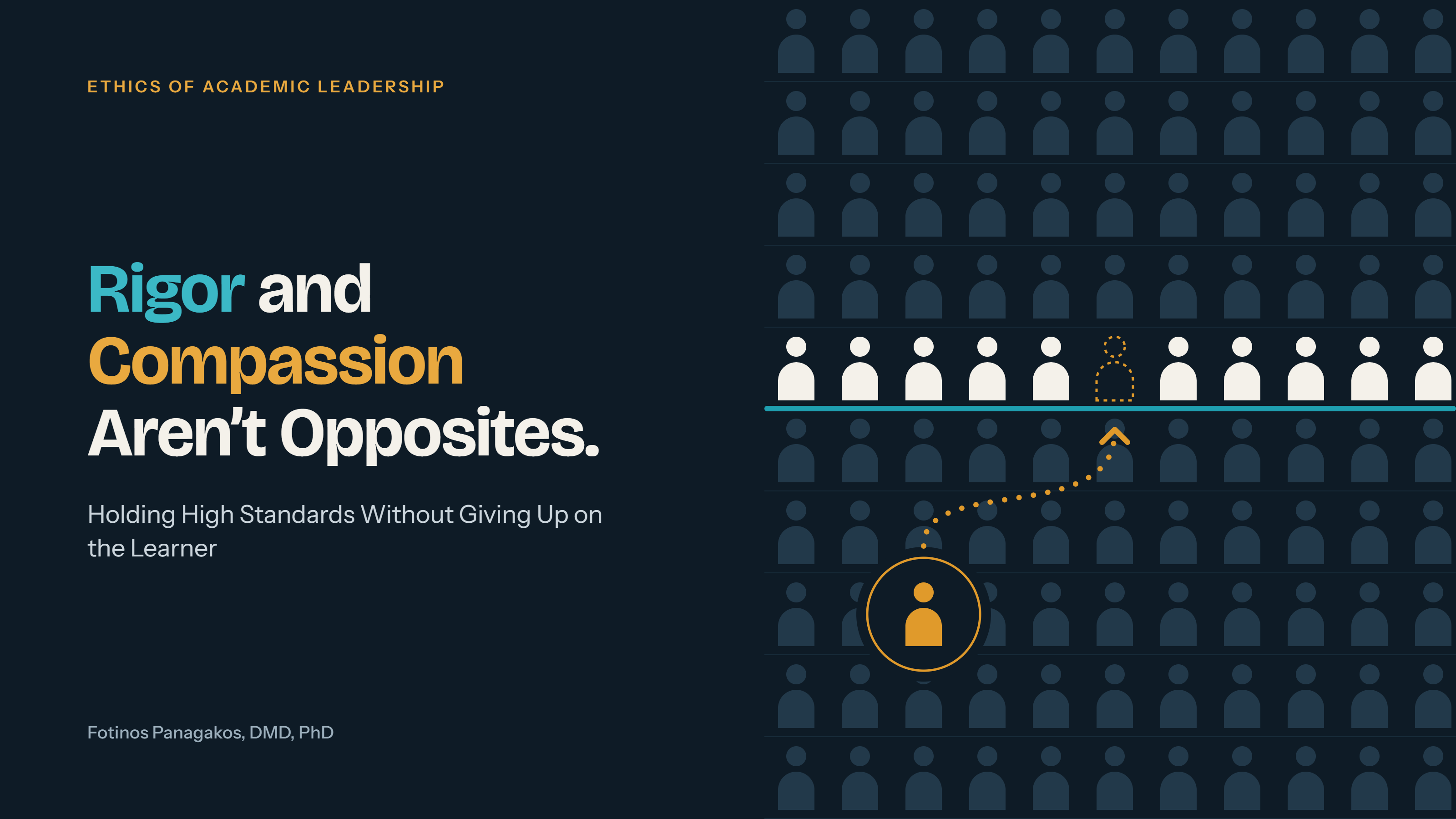
Rigor and compassion aren’t opposing forces in healthcare education — they’re partners. The strongest academic leaders I know hold both at once: unwavering standards paired with a genuine commitment to understanding and supporting each student’s path forward. That combination is what turns promising students into excellent, patient-ready providers, and it’s the throughline that connects a program’s values to the care its graduates will one day deliver.
Because of that link to the future patients for whom graduates will eventually provide care, weighty ethical questions arise when a student’s performance in any didactic or clinical scenario falls short of standards.
For students pursuing healthcare degrees who fail a class or don’t perform adequately in a key metric during their education, the question arises for faculty and institutional leaders: is this student on the correct career path? Does he or she have what it takes to become a competent healthcare provider?
In prior eras, these sorts of decisions were sometimes phrased in an existential and dramatic fashion from the start of a college journey. Students beginning their post-secondary journey towards a healthcare career might have heard welcome speeches from leaders with phrases like, “Look to your left, look to your right. One of the three of you won’t be here by graduation.”
That philosophical stance contains a truth: a healthcare career isn’t for every student, and not every desired career pathway is appropriate, even for gifted students. Earning a degree in the health sciences and then becoming a provider requires an individual with an exceptional suite of abilities, knowledge, temperament, emotional intelligence and more.
But part of our job as health professions leaders and educators is to understand our students as people in a meaningful and substantial way, and to offer opportunities for course correction when a student drifts off course. A failure or misstep along the way need not blind us – even with the high standards we adhere to – to understanding a student’s situation and providing a path for them to receive the remediation needed to regain their footing. Educating students to become excellent providers doesn’t require choosing between compassion and rigor — it calls for holding both at once.
A humanistic approach, rooted in the non-negotiable objective of shaping competent caregivers, is key. Course correction for a student not meeting an objective is certainly not a guaranteed path to success – but it is a plausible one. Maintaining that approach can benefit not only an aspiring healthcare provider, but their future patients as well.
The question is never “Should I let them get by?,” but “How do I identify what this student actually needs and how do I support them?” The challenge is to hold high standards and genuinely support the student. As in the welcome ceremony anecdote, this is not a perspective universally shared by healthcare educators, which is why it is so important for the leadership team to set this cultural tone for it to be successful.
And I believe we should. An incoming class of healthcare students in the modern era can include students who are older than in prior eras, including some transitioning from prior careers, as well as those who have families. Understanding those students and providing an appropriate path of remediation when needed can help a student stay on target.
The throughline of ethical obligations for a healthcare program encompasses the entire process, and it begins at admissions: are we identifying the right students in the first place? After a careful selection process, I feel it’s incumbent on the program to exhaust support modalities before a dismissal. In the past, those remediations may have included a blanket approach of remediating a course at the end of a term or repeating an entire year after certain failures. But we can sometimes achieve quicker corrective results by shifting to a model of targeted, course-level correction during the course itself. These modalities can include a single retake on one of three exams, or a return to simulation practice to improve clinical skills before returning to provide that care to a patient.
Not every intervention will work. Some students will self-select a path that ends before graduation, not only by failing to meet standards but also by not recalibrating properly when given remedial options. But occasionally, we may be presented with a student who – after all remedial measures – is not on a path to competency within their intended field yet could still be an excellent healthcare provider in another specialty. I’m reminded of a student who did not meet the requirements to become a dentist, as they had desired, but had many of the skills and traits to be a great healthcare provider. During the exit interview I held with them after they withdrew from our program, I encouraged them to chart a new path for themselves in another healthcare discipline, as I truly believed someone with their qualities and compassion needs to be in healthcare.
For some schools, the pressure to lose a student not responding to remediation can be acute: for a small program, losing tuition revenue can be a concern. But a more holistic view and set of goals – connecting the university’s values and the ethical choices of the faculty, staff and leadership team through to the care a future patients will receive from our graduates – must remain the focus. Any loss of tuition revenue should be balanced against larger goals. For instance, a program built around genuine competency (not grade inflation or accepting mediocrity) is inherently more defensible for accreditation and program reputation, even if it produces some attrition.
Values held by a healthcare academic institution must never bend to internal or external pressures. Instead, the two should work in tandem. Institutions must decide what they’re committed to — and fund the support structures (advising, remediation, counseling) that back that commitment up. Ethical leadership in healthcare education is ultimately about serving and supporting two people at once — the student in front of you and the patient they’ll one day care for.
Contact AAL to learn more about our programs and services.
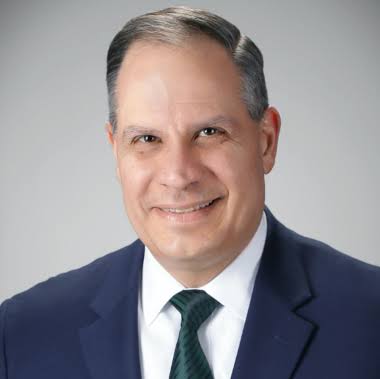
Author:
Fotinos Panagakos, DMD, PhD
Dr. Panagakos is Founding Dean at Pacific Northwest University School of Dental Medicine
RECENT ARTICLES